
Location Info
Public Building
Kazımdirik
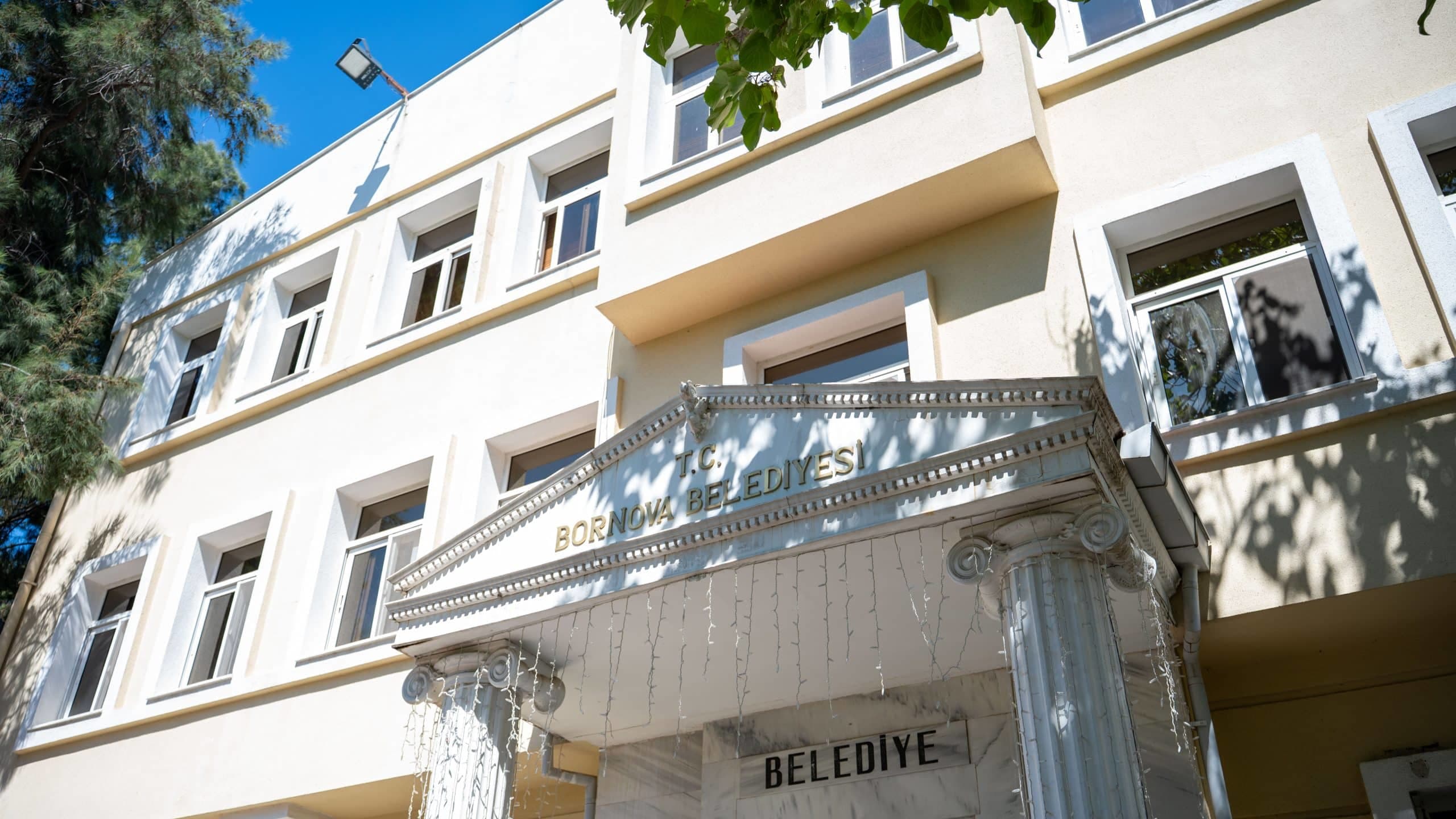
Located in the center of Bornova, the Historic Municipal Building is one of the city's most important public structures. The building is situated within Buyukpark, which played a critical role in Bornova's historical transformation. The area where today's Buyukpark stands is referred to as a "large Turkish cemetery" in Richard Pococke's 1739 travelogue. From the 18th century until the 1920s, the site served as a cemetery...


Historic Municipal Building
Located in the center of Bornova, the Historic Municipal Building is one of the city's most important public structures. The building is situated within Buyukpark, which played a critical role in Bornova's historical transformation. The area where today's Buyukpark stands is referred to as a "large Turkish cemetery" in Richard Pococke's 1739 travelogue. From the 18th century until the 1920s, the site served as a cemetery...
Introduction
Situated in the centre of Bornova, the Historic Municipal Building is one of the town's most important public buildings. The structure is set within Büyükpark, which played a pivotal role in Bornova's historical transformation.
The Historical Background of Büyükpark
The site of present-day Büyükpark is described in Richard Pococke's 1739 travelogue as "a great Turkish burial ground."
Used as a cemetery from the 18th century until the 1920s, the area was cleared — along with other cemeteries in the city — during the governorship of İzmir Governor Rahmi Bey and converted into a park of 20 dönüm (approximately 5 acres).
In 1933, an Atatürk bust and an ornamental fountain by sculptor Hadi Bara were among the park's earliest monumental installations.
The park was officially opened in 1934 by İzmir Governor Kazım Dirik. The stone erected to mark the occasion still stands at the entrance of the Historic Municipal Building.
The Historic Municipal Building (1942–1946)
Construction of the Bornova Municipality Historic Service Building began in 1942 and the building was inaugurated in 1946 by the then Mayor, Ethem Pekin.
Over time, the building has undergone:
- Various architectural alterations to its front elevation,
- The addition of an extra storey.
A tombstone discovered during the construction of the Uğur Mumcu Cultural Centre in the park is now displayed on the green.
Architectural Features
The Historic Municipal Building bears the character of an austere, functional public building of the early Republican period:
- Symmetrical elevation
- Stone and rendered surfaces
- Generous fenestration
- Ground floor plus additional storey
- Integrated positioning with Büyükpark
The building powerfully reflects the restrained modernist approach of 1940s municipal architecture.
Present-Day Significance
Büyükpark and the Historic Municipal Building hold a special place in Bornova's socio-cultural identity as:
- an administrative centre,
- a focus of public life,
- a site of historical memory.
Joined with the multi-layered past of the park, the building is an important witness to Bornova's Republican-era urbanisation.