Culture & Memory
Museums, monuments and cultural centers that open the door to the city's memory.
 Museum
Karacaoğlan
Yesilova and Yassitepe Mounds are archaeological sites where the oldest human findings in Izmir have been unearthed. Excavations in this area, located in Bornova's Karacaoglan neighborhood, have revealed settlement layers dating back 8,500 years (6500 BC). The mound, accidentally discovered in 2003, was declared a 1st Degree Archaeological Site in 2005.
 Museum
Kazımdirik
Yassitepe Mound, located within the boundaries of Bornova's Kazimdirik neighborhood, is approximately 3 km north of Yesilova Mound. About 6,000 years ago, following the cultural process at Yesilova, a new community settled in this area and became one of the pioneers of Izmir's first urban centers. During the Bronze Age, the Aegean Sea coastline was further inland than today, and Yassitepe was only 2.5 km from the shore...
 Mansion
Erzene
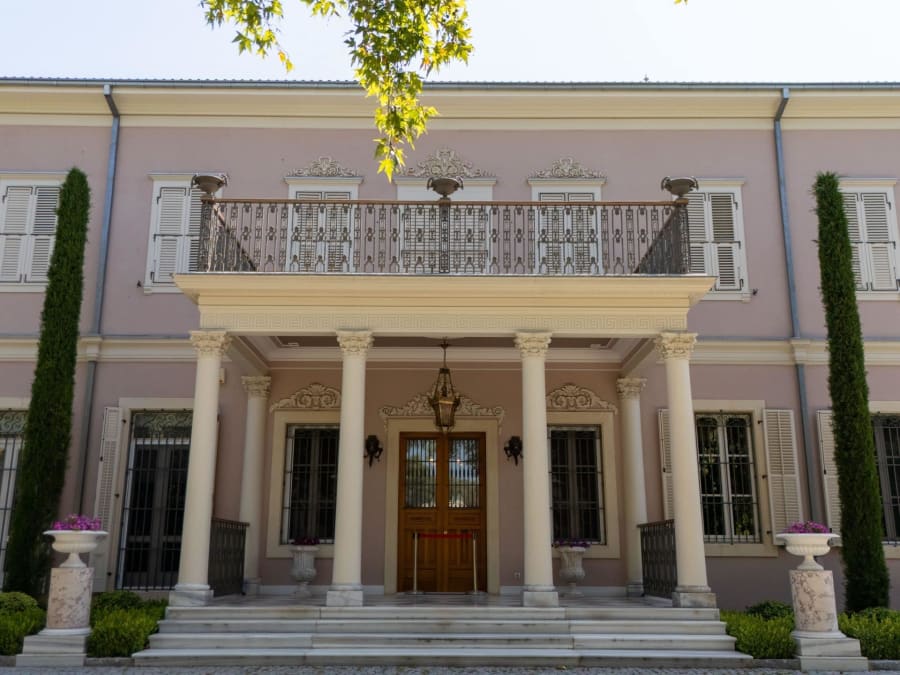
Mattheys Mansion was built in the late 18th century by English merchant John Maltass and is one of the oldest Levantine residences in Bornova. The property later passed to Maltass's daughter Eugenie Wood and the Wood family. One of the mansion's long-term last residents, Hortense Wood, was an intellectual immersed in music and literature who had taken lessons from Franz Liszt. The diaries kept by Hortense Wood...
 Mansion
Kazımdirik
Belhomme Mansion — originally known as Xenopoulou Mansion — was built in the 1880s by the English-origin Wolf Brothers. One of the mansion's first known owners was Greek-Catholic merchant Pierre Xenoupoulo, followed by the Belhomme Family. The family's last Levantine representative, Helen Armand, was among the mansion's residents in the mid-20th century. In the 1950s, ownership passed to a Turkish family, and in the 1960s the mansion was nationalized...
 Mansion
Kavaklıdere
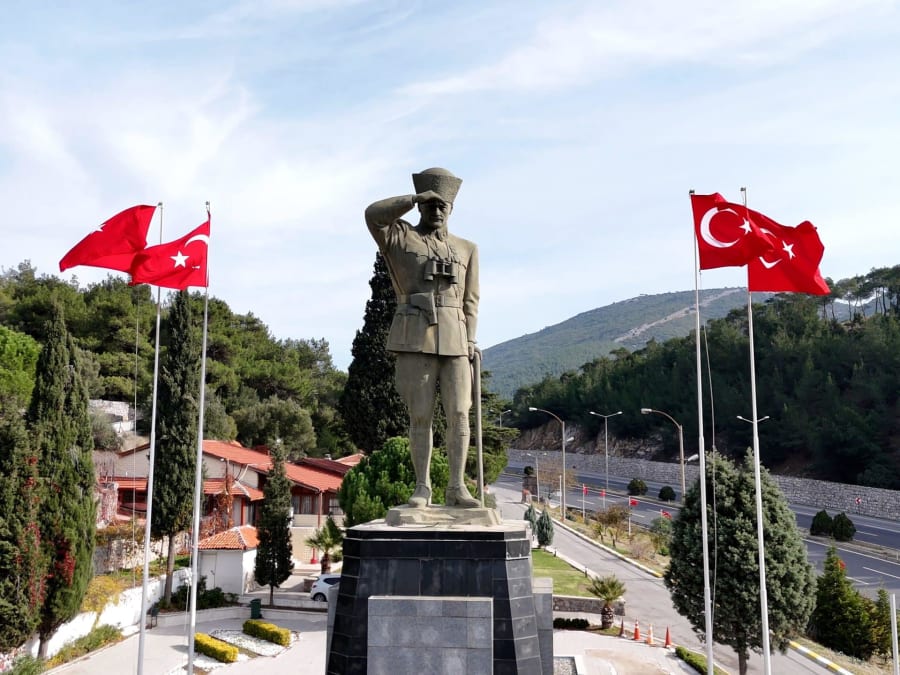
Belkahve, one of the strategic passes east of Izmir, holds a special place in Turkish history as the point where Mustafa Kemal Ataturk first gazed upon Izmir on September 9, 1922. Bornova Municipality opened the Belkahve Ata Memorial House Visitor Center on September 9, 2016, to keep this significance alive. The center offers visitors both the spirit of the War of Independence and the symbolic moment of Izmir's liberation...
 Square
Kazımdirik
Located in the center of Bornova, Abide-i Hurriyet Square is a place of memory that keeps alive Turkey's struggle for freedom through its monument dedicated to the martyrs of the March 31 Uprising, its historical figures, and cultural symbols. Bornova's Abide-i Hurriyet Square was inaugurated on April 27, 2025, on a 2,700-square-meter area between Sanayi and Universite Avenues, right next to Yasar University...
 MuseumsCivil Architecture
Karaçam / Sabuncubeli
Established within a massive 520 m2 nomadic tent structure at the Sabuncubeli locality below Karacam Village, the center exhibits thousands of objects related to Yoruk Turkmen culture. Operating under the Izmir Yoruk Turkmen Federation, the center is open for free visits every day of the week.
 MuseumsCivil Architecture
Bornova Merkez
Located on Fevzi Cakmak Avenue, the Ege University Ethnography Museum houses a rich collection of Anatolian and Rumelian regional costumes as well as musical instruments from the Turkic world. The museum is notable for its artifacts reflecting cultural diversity.
 MuseumsCivil Architecture
Bornova Merkez
Opened in 2021, the Izmir Literature Museum Library offers a special collection featuring works and objects of Izmir-born authors, along with facsimile editions of manuscripts. Among the prominent exhibits are the first edition of Ataturk's Geometry book, a signed book by Halit Ziya, and Attila Ilhan's beret.
 MuseumsCivil Architecture
Bornova Merkez / EÜ Kampüsü
The second largest natural history museum established in Turkey, the Ege University Natural History Museum is also the country's first academic museum housed in a university building. Located on the Ege University Faculty of Science campus, it features a rich collection of fossils and rocks spanning 4.5 billion years of Earth's history. There is a symbolic admission fee.
 MuseumsCivil Architecture
Bornova Merkez
The Ege University Paper and Book Arts Museum presents the 2,000-year journey of the book through examples from different cultures. Displaying the world's smallest book and thinnest paper, the museum is one of the three major paper and book arts museums in the world.
 MuseumsCivil Architecture
Bornova Merkez
The mansion on 80th Street was built between 1854 and 1856. Ownership of the house successively passed to the Douglas Paterson, Edwin Charnaud, De Zandonati, James Gout, and Victor Whittall families. Restored by its last owner Lucien Arkas, the house currently operates as the Arkas Maritime History Center, housing a very rich collection of maritime history artifacts.