
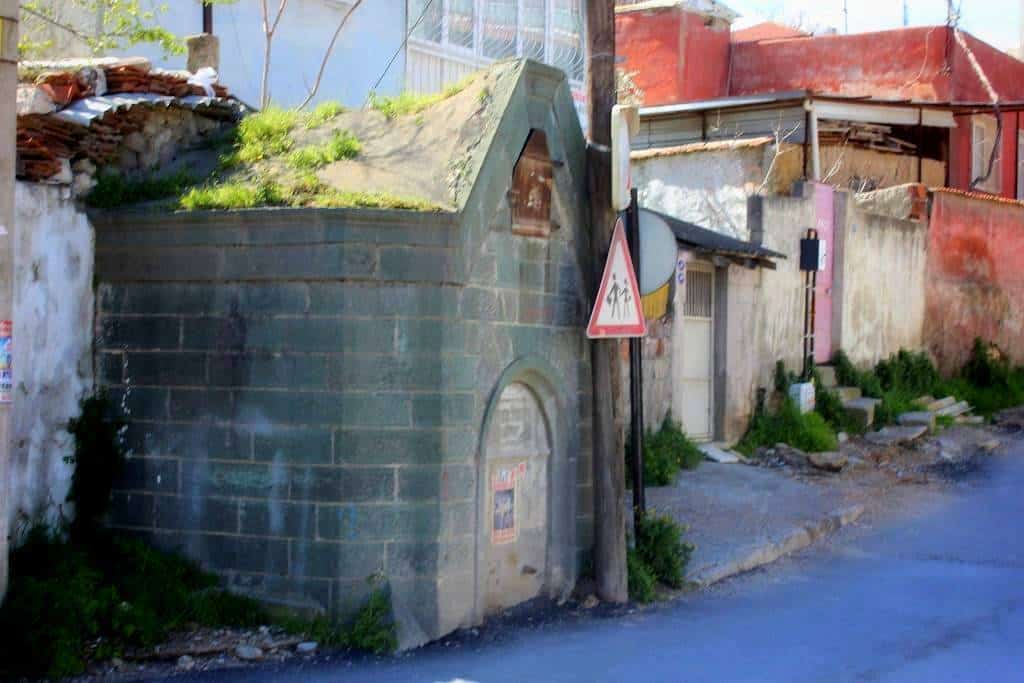
Altindag Unnamed Fountain
Located at the corner of Fevzipasa Avenue and Kivanc Avenue in the Altindag neighborhood, this Ottoman-era fountain is notable for its single-facade form with a round arch and triangular pediment. Although its inscription has been damaged, its decorative details date to the late 19th or early 20th century. It is one of the well-preserved examples of public water architecture in Bornova.
Introduction
Situated at the corner where Fevzipaşa Avenue meets Kıvanç Avenue in the Altındağ neighbourhood, this fountain is one of the rare surviving late Ottoman-period water structures in Bornova.
Known among the local population as the "Nameless Fountain," the structure is notable for its restrained yet elegant architecture.
Architectural Features
- Plan type: Rectangular-plan, single-faced fountain with cistern.
- Elevation: Round-arched niche with triangular pediment.
- Materials: Dressed stone and green cladding material (characteristic of the late 19th century).
- Trough: Set below road level.
- Interior of the niche:
- Inscription panel at the top (partly damaged, illegible).
- Mirror stone and two taps below.
The use of green cladding material and the pediment form indicate that the fountain dates to the late 19th or early 20th century.
Historical Value
Although the inscription has not survived, the fountain's formal characteristics and stonemasonry bear a resemblance to public water structures built in and around Bornova during the final Ottoman period.
The preservation of its original form makes it one of the best-preserved fountains in Altındağ.
Conservation Status
The structure is generally sound; signs of wear are visible only on the inscription and pediment surfaces. Although no longer in active use by the local population, it lends a historical character to its surroundings by maintaining its visual integrity.
Location Info
Category
Historic Fountains
Altındağ Mahallesi, Fevzipaşa Caddesi ile Kıvanç Caddesi köşesi, Bornova
Located at the corner of Fevzipasa Avenue and Kivanc Avenue in the Altindag neighborhood, this Ottoman-era fountain is notable for its single-facade form with a round arch and triangular pediment. Although its inscription has been damaged, its decorative details date to the late 19th or early 20th century. It is one of the well-preserved examples of public water architecture in Bornova.


