Location Info
Religious Building
Ergene
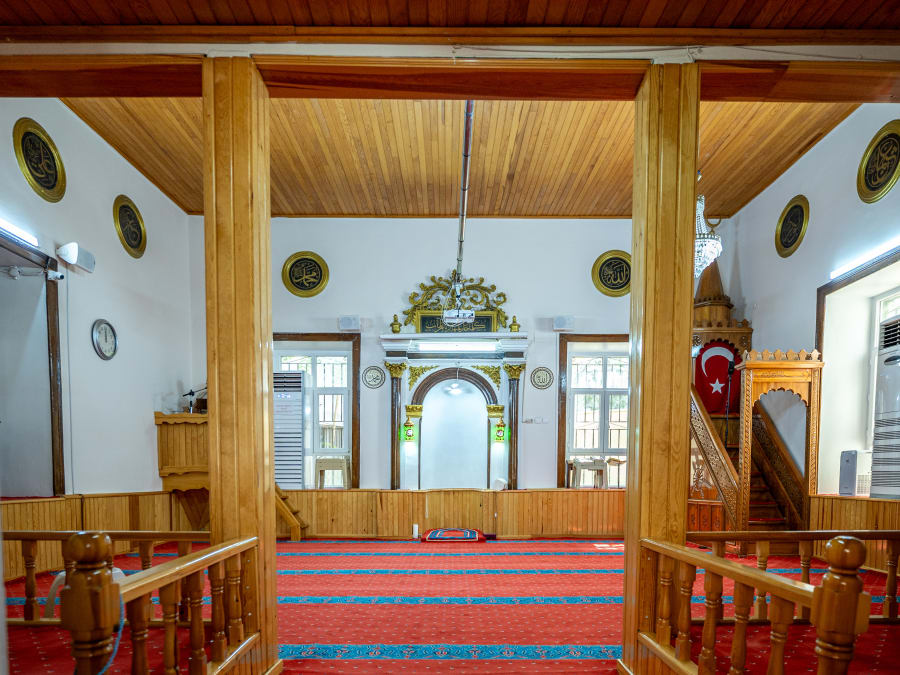
The structure is located on 538th Street in Bornova's Ergene neighborhood. The mosque is situated within Bornova's Grand Bazaar. Also known as the Grand Mosque, Bornova Great Mosque, Bazaar Mosque, or Cami-i Kebir, the structure sits within a courtyard. Entry is through the narthex on the north facade. Built on a rectangular plan, based on the dome before the mihrab, it features five aisles in the longitudinal direction [...]


Huseyin Isabey Mosque
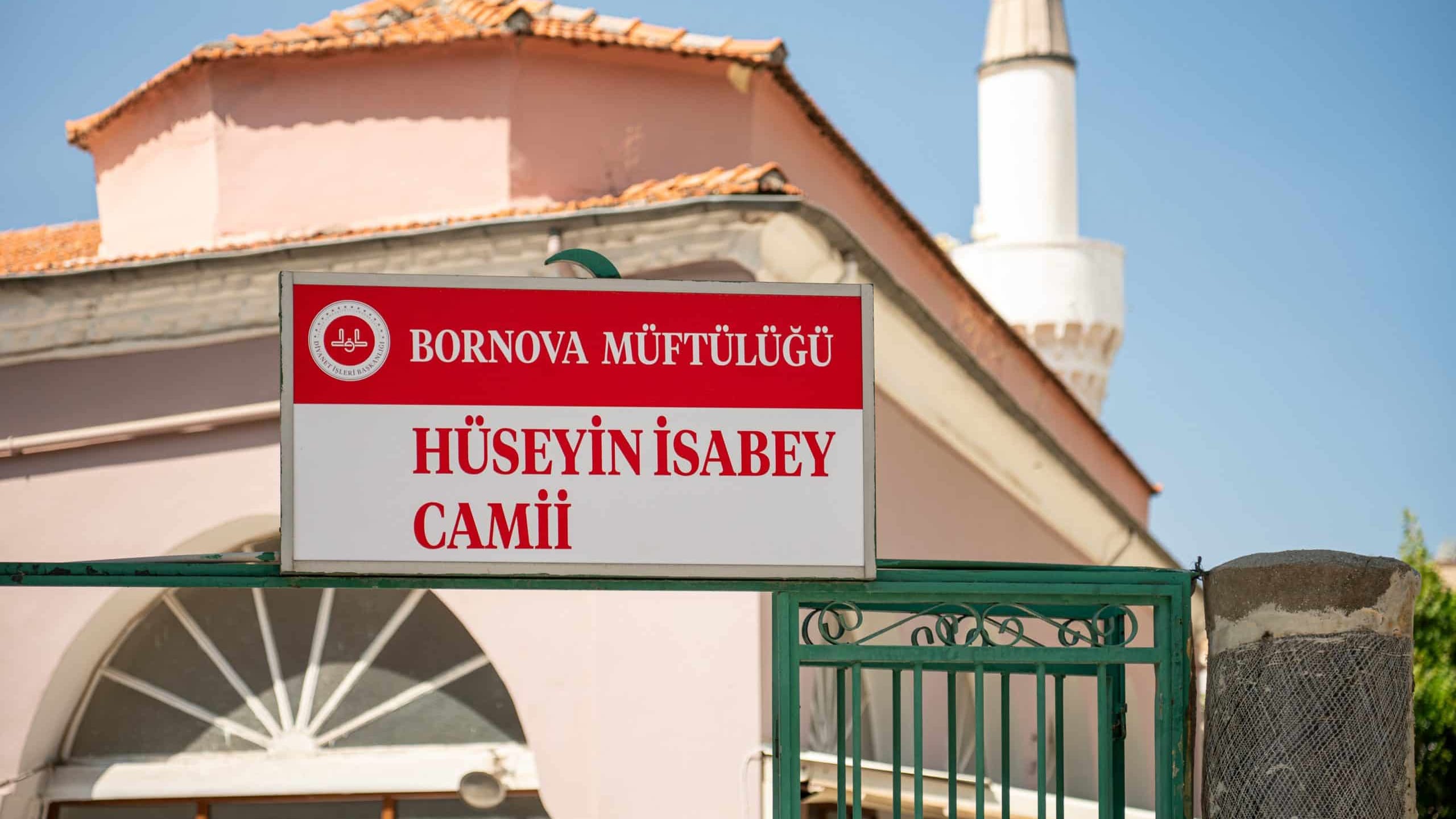
The structure is located on 538th Street in Bornova's Ergene neighborhood. The mosque is situated within Bornova's Grand Bazaar. Also known as the Grand Mosque, Bornova Great Mosque, Bazaar Mosque, or Cami-i Kebir, the structure sits within a courtyard. Entry is through the narthex on the north facade. Built on a rectangular plan, based on the dome before the mihrab, it features five aisles in the longitudinal direction [...]
The building is situated on 538th Street, Ergene neighbourhood, in the district of Bornova. The mosque stands within Bornova's Grand Bazaar. Also known as the Grand Mosque, Bornova Great Mosque, Bazaar Mosque or Cami-i Kebir, the building is set within a courtyard.
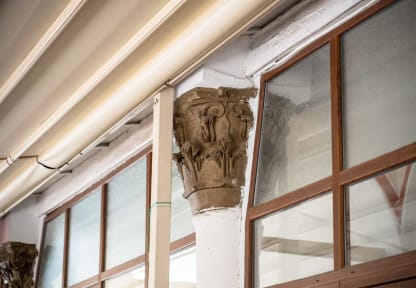
Entry to the building is through the narthex on the northern elevation. Built on a rectangular plan, the structure can be described as having a sanctuary with five longitudinal aisles, taking its cue from the dome before the mihrab. The mihrab projects outward and is covered by a dome. The sanctuary is roofed with a flat timber ceiling supported by twelve columns. The column capitals date from the Roman period. One of the columns before the mihrab bears the word "Meles" in an ancient script — a reference to the Meles Stream that flows through Bornova. This inscription is no longer visible, as it was covered with panelling during the most recent repair.
On the northern elevation there is a five-bay narthex. A minaret adjoins the western wall, accessed from the narthex. It is thought to be more original in its materials than the building itself. The minaret has a cylindrical shaft rising from a pentagonal base of rough-hewn stone. At the lower and upper sections of the boot, a chevron motif known as "zencirek" is executed in brick. The shaft is adorned with geometric patterns in brick and mortar. Stone and brick are the predominant materials of the minaret, though cement has been used in later interventions. The gallery is encircled by two rows of muqarnas. The cap is conical in form. The portico columns of the narthex are identified as dating from the Roman period.
The patron and date of construction of the building are unknown; however, an inscription on the portal records that the building was repaired in 1153 AH / 1740–41 CE by Seyyid Ali Ağa.
Çiçek Güneş / Art Historian
Kuyulu Ersoy İ.,
"Religious Architecture I: Mosques and Masjids", İzmir City Encyclopaedia – Architecture (Vol. I), İzmir 2013, İBB Publications, pp. 98–99. Gülden Yılmaz Z., "Evaluation and Conservation Proposals for Bornova's Traditional Bazaar District with its Monumental Buildings and Commercial Fabric", unpublished Master's thesis, İzmir, 2024, pp. 45–46.
Mert H.,
Bornova through the Ages: Social, Economic and Cultural Aspects, Bornova Municipality Cultural Publications, İzmir 2009, p. 92.
Günay V., "Bornova Central Hüseyin İsa Bey Mosque and its Inscriptions", Journal of Historical Studies, Vol. XXIII No. 2, December 2008, p. 1950.