
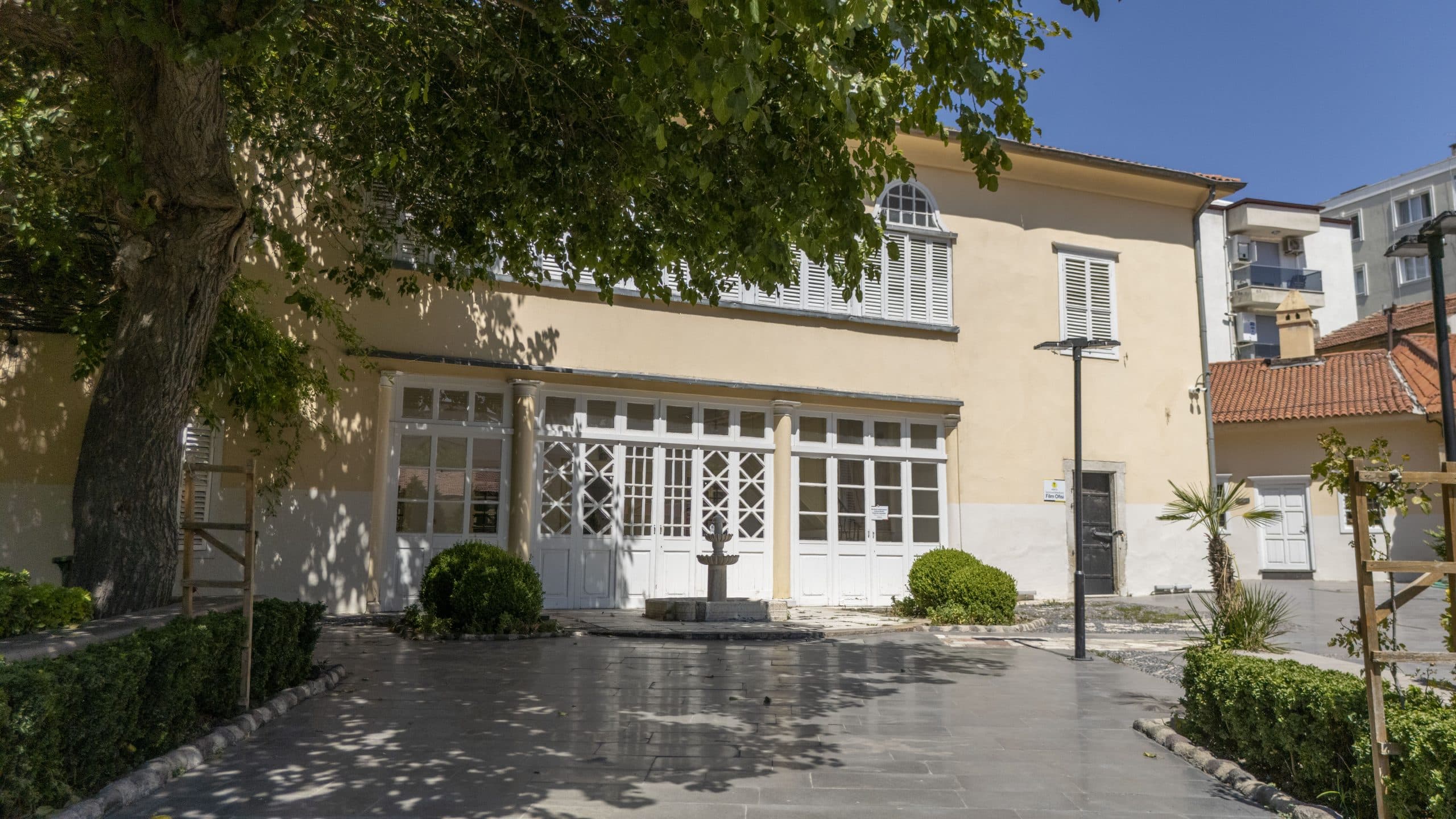
Dramalilar Mansion
Dating to the late 18th and early 19th centuries, the Dramalilar Mansion belonged to a Greek family before 1922. Passing to the Dramali Family, who came from Drama during the population exchange, the building was purchased and restored by the Bornova Municipality in 2010. An eclectic example of Levantine-Ottoman residential architecture with its bathhouse and outbuildings, the mansion today serves as a culture and arts center.
Introduction
Although the precise date of construction of the Dramalılar Mansion, situated on 2nd and 3rd streets in the Erzene neighbourhood, is not known with certainty, it is dated to between the late 18th and early 19th centuries. The mansion is a building complex comprising the main house, a bathhouse, service quarters, stables and a gatehouse. Its south-western elevation faces the front courtyard, whilst its north-eastern elevation looks onto the rear courtyard.
History
Used by a Greek family before 1922, the building passed to the Dramalılar family following the population exchange and was used as a residence until 2010. Purchased by Bornova Municipality in 2010, the mansion was transformed into a centre hosting cultural and artistic events following a comprehensive restoration.
Cultural Function and Exhibitions
Following restoration, numerous important exhibitions have been held at the Dramalılar Mansion:
- 2012 — "100 Famous Faces" exhibition (100 masters of Turkish painting)
- 2013 — "The Colour of My Dreams" exhibition of works by Joan Miró
- 2015 — Watercolour Festival
- 2022 — "Centenary of Victory and Liberation" group exhibition with the participation of Etem Çalışkan
- 2024 — "Small Works, Great Signatures" exhibition: drawings by Abidin Dino, Fikret Mualla, Avni Arbaş, Bedri Rahmi Eyüboğlu and some forty other artists.
Architectural Features
Art historians note that the building displays eclectic characteristics. The mansion has been enriched by later plan modifications and additions, and has been adapted for contemporary use whilst preserving its original plan.
Photo Gallery
Location Info
Dating to the late 18th and early 19th centuries, the Dramalilar Mansion belonged to a Greek family before 1922. Passing to the Dramali Family, who came from Drama during the population exchange, the building was purchased and restored by the Bornova Municipality in 2010. An eclectic example of Levantine-Ottoman residential architecture with its bathhouse and outbuildings, the mansion today serves as a culture and arts center.


