Historic Buildings
Discover Bornova's past through its architectural heritage spanning from mansions to public buildings, mosques and churches.

The Aliberti (Wolf) Mansion is an important Levantine residence built in the mid-19th century. Although there are differing accounts regarding its first occupants between the Wolf Brothers and the Paterson Family, the mansion also hosted the La Fontaine Family in the early 20th century. It has been used by the Aliberti Family since the 1950s.

Located at the entrance of Fevzi Cakmak Avenue, the Aliotti (Michel Topuz) House was built in the 19th century by the Aliotti Family, one of Bornova's prominent Levantine families. The building later passed to the Topuz Family and has largely preserved its original Levantine architecture. Today it operates as a dental clinic.

Thought to have been built in the late 19th century, the Alain Giraud House is located on Bornova's 83rd Street. Its first known occupant was Alain Giraud of the Giraud Family. As of 2024 used as an educational institution, the house is said to have hosted Keriman Halis Ece, the first Miss Universe, according to local legend.

Although the exact construction date is unknown, the Edward Whittall Mansion is known to have existed since the period when the Duke of Rovigo stayed in Izmir between 1816 and 1819. Taken over by British botanist Edward Whittall in the late 19th century, the mansion is notable for its botanical garden that gave its name to species such as Tulipa whittallii and Galanthus whittallii, and for hosting guests including Ataturk.
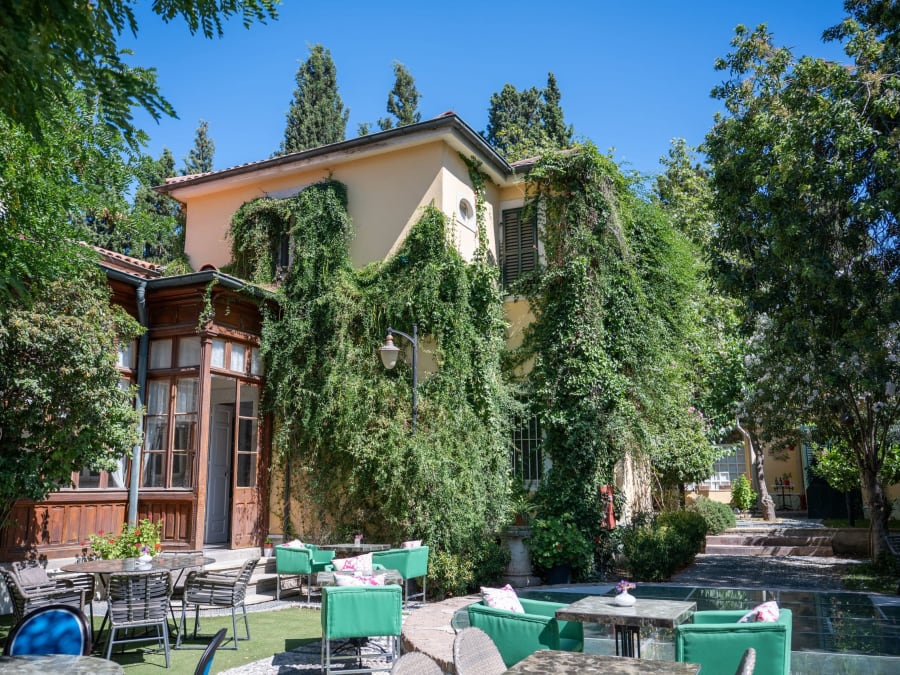
Notable for its 1831-dated pebble mosaic floor decoration, the Charnaud Mansion is one of Bornova's oldest Levantine residences. Originally owned by the Zipcy Family, the property passed to the Charnaud Family in 1919 and then to the Clark Family. Today it has been restored and opened to tourism as a boutique hotel. It is one of the significant examples of Levantine heritage in Bornova.

Built in 1860 by Scottish merchant John Bortwick Paterson, the Paterson Mansion is one of Bornova's most magnificent Levantine residences, with its monumental 38-room structure, ballrooms, musical culture, golf course, and horse-breeding grounds. During the Republican era, the mansion also served as a NATO office and factory. Today it has been transferred to the Ministry of Culture and Tourism.
Belonging to the British Whittall family, this mansion is one of the most magnificent Levantine structures in Bornova.