
Location Info
Mansion
Erzene
The site where Charlton Whittall Mansion stands was a monastery built for Dutch nuns in the early 18th century. Later, a single-story residence was built by a Dutch immigrant. James Whittall, one of the famous Levantine families who settled in Izmir in 1817, purchased this house in the 1820s. After his death, the property passed to his brother Charlton Whittall. As the family expanded and renovated the structure, the mansion became one of Bornova's...

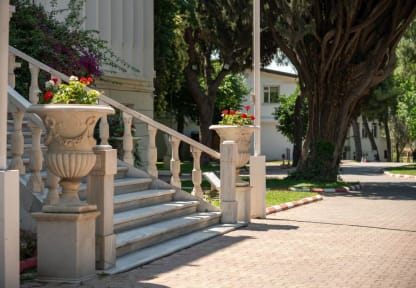

Charlton Whittall Mansion
The site where Charlton Whittall Mansion stands was a monastery built for Dutch nuns in the early 18th century. Later, a single-story residence was built by a Dutch immigrant. James Whittall, one of the famous Levantine families who settled in Izmir in 1817, purchased this house in the 1820s. After his death, the property passed to his brother Charlton Whittall. As the family expanded and renovated the structure, the mansion became one of Bornova's...
Introduction
The site on which Charlton Whittall Mansion stands was originally a convent built for Dutch nuns in the early 18th century. It was subsequently converted into a single-storey dwelling by a Dutch emigrant.
In 1817, James Whittall, a member of one of the prominent Levantine families who had settled in İzmir, purchased the property in the 1820s. Following his death, the estate passed to his brother Charlton Whittall. As the family enlarged and renovated the building, the mansion came to be known in Bornova as the "Great House" (Büyük Ev).
The Whittall family, active in international trade, held an important position in the social and political life of Bornova.
Architectural Features
Structural Development
- Original building: a single-storey residence over a basement.
- After 1867: a second storey and lateral wings were added.
- Extensions on the northern and southern elevations provided additional space.
Elevation Design
- On the main elevation, a grand double-arm staircase reminiscent of European Baroque palaces is the mansion's most distinctive architectural feature.
- A balcony was added to the upper storey, with the space beneath enclosed.
- The balcony arrangement is repeated on the rear elevation.
Plan and Materials
- Typical Levantine residential plan: central distribution space with flanking rooms.
- A significant proportion of the materials used were imported from abroad.
Historical Recollections and Notable Guests
Thanks to the influence of the Whittall family, the mansion became an important centre for hosting aristocratic and political guests in Bornova.
Among those who stayed at or visited the Great House:
- Sultan Abdülaziz (1863) — spent two of his three nights at the mansion.
- Alfred Ernest Albert, Duke of Edinburgh (1886)
- George Frederick Ernest Albert — later King George V, in 1910
- Prince Andrew of Greece (1921)
The special tea reception arranged for Sultan Abdülaziz on a hillock in the garden attests to the mansion's significance in the diplomatic relations of the era.
Ownership and the Republican Period
- In the 1930s, the mansion passed to the Giraud family, relatives of the Whittalls.
- It was nationalised in 1960 and transferred to the Treasury of the Republic of Turkey.
- It was subsequently allocated to Ege University.
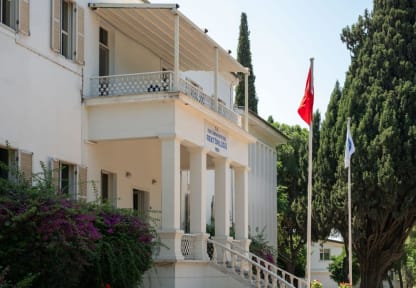
Today the mansion is used as the Ege University Rectorate Administrative Building and endures as one of the largest preserved examples of Bornova's Levantine heritage.
Symbol: The İzmir Caïque
The Whittall family, engaged in commerce, maintained harbour caïques.
İzmir caïques were vital for:
- ferrying cargo and passengers from ships to the harbour,
- conducting coastal trade.
For this reason, the Great House is symbolised by the "İzmir Caïque" in the Bornova Miras project.
References: (1) Prof. Dr Hasan Mert (Bornova through the Ages: Social, Economic and Cultural Aspects)
(2) Hasan Arıcan (Bornova Mansions, Travellers and Memoirs)
(3) Altan Altın (Bornova: A City of Stories)
(4) Hümeyra Birol (Spatial Identity of Levantine Mansions in Bornova and Buca in the 19th-Century Context of Westernisation)