Historic Buildings
Discover Bornova's past through its architectural heritage spanning from mansions to public buildings, mosques and churches.
 MansionsCivil Architecture
Bornova Merkez
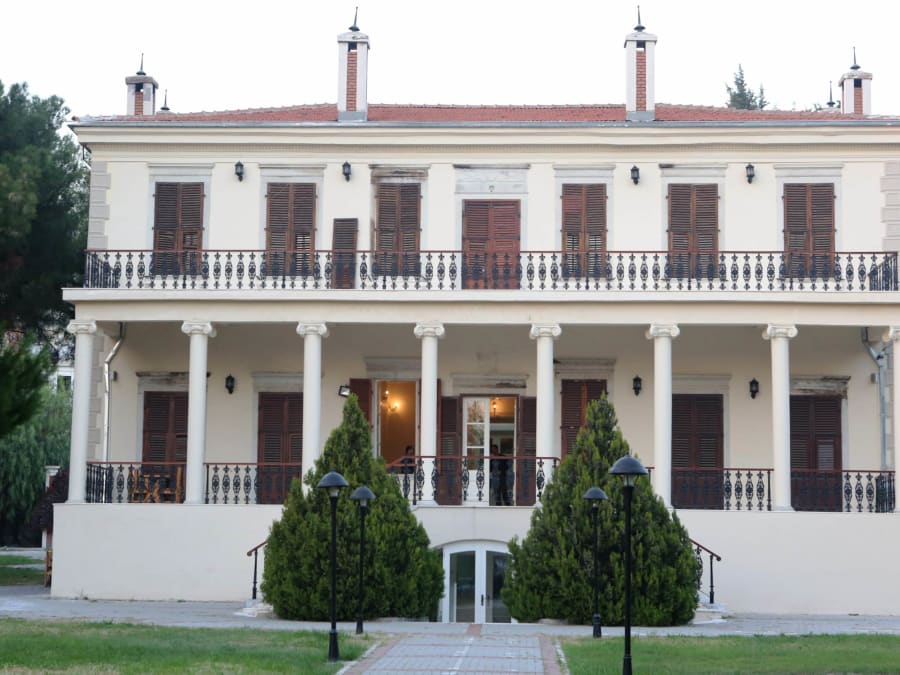
The Giraud Mansions, consisting of two twin mansions built by Greek-origin Marcopoli in 1860, are notable for their position overlooking Bornova Square. While the right structure retains its original form, the left mansion was rebuilt by Harold Giraud in the 1930s. Today they serve as private residences.
 MansionsCivil Architecture
Erzene Mahallesi / Bornova Merkez
Built in 1880 by the British Edwards Family, the mansion is one of Bornova's important Levantine heritage buildings. It acquired the name "Murat Mansion" from Constantin Murat, who married Edwards's daughter Emily. Expropriated in 1980, the building was evaluated by the Izmir Metropolitan Municipality and Ege University after restoration. Today it serves as the Izmir Directorate of Surveying and Monuments.
 MansionsCivil Architecture
Erzene Mahallesi
Dating to the late 18th and early 19th centuries, the Dramalilar Mansion belonged to a Greek family before 1922. Passing to the Dramali Family, who came from Drama during the population exchange, the building was purchased and restored by the Bornova Municipality in 2010. An eclectic example of Levantine-Ottoman residential architecture with its bathhouse and outbuildings, the mansion today serves as a culture and arts center.
 MansionsCivil Architecture
Bornova Merkez
Located on 83rd Street, known by locals as "Long Street," the Douglas Whittall House was built in the late 19th century on a portion of the vineyards belonging to David Offley, the US Consul of the period. Built as a summer house for the Lochner Family, the property remained in Douglas Whittall's possession until 1977 and is currently used as a cafe.
 MansionsCivil Architecture
Bornova Merkez
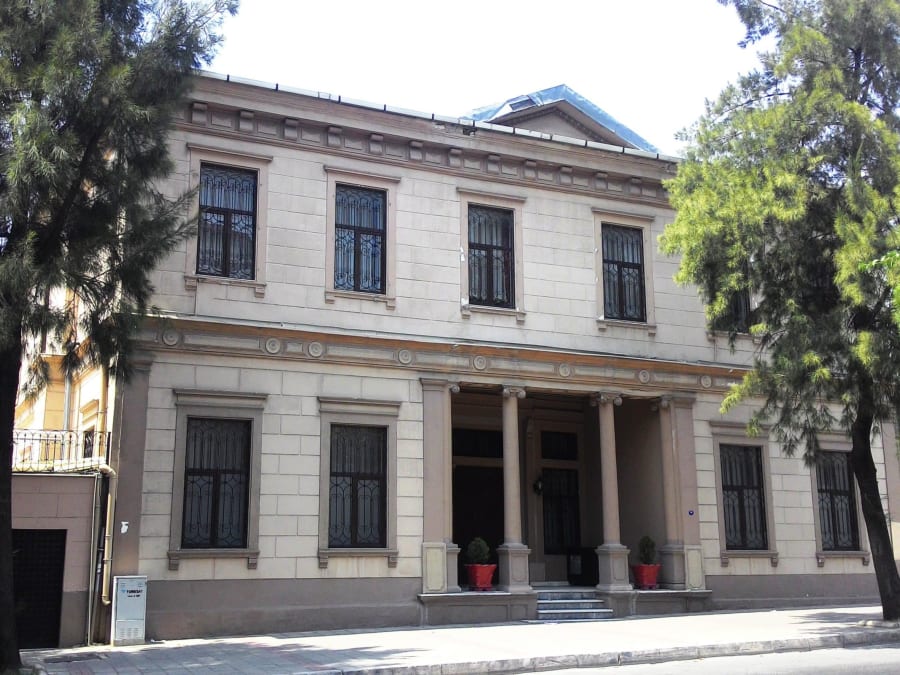
Built in the 1830s by the Zipcy Family, the De Andria Mansion is one of the elegant early examples of Levantine architecture in Bornova. Owned by prominent Levantine families including Richard Matheys and Charles Balladur, the building was used as the De Andria Family's residence until 1973. Today it has been restored and serves as a cafe.
 MansionsCivil Architecture
Bornova Merkez
Built by the American Davy, the mansion was used by the Macropodere Family in the early 20th century and served as the residence of Izmir Governor Rahmi Bey for a period. On April 11, 1934, Mustafa Kemal Ataturk had his photograph taken with the people of Bornova here. Today it serves as the Officers' Club.
 MansionsCivil Architecture
Bornova Merkez
Known as the "Big House," the C. Whittall Mansion is one of Bornova's oldest Levantine residences. Built on the site of a monastery originally constructed for Dutch nuns in the early 18th century, the building was purchased by James Whittall in the 1820s. Expanded by Charlton Whittall after 1867, the mansion today serves as the Ege University Rectorate.
 MansionsCivil Architecture
Bornova Merkez
Thought to have been built as a Levantine mansion in the late 19th century, the building was previously used by the Mavrocordato and Boscovich families. Serving as Hilal Primary School during the Republican era, the building has been used as the Bornova Public Education Center since 1963.
 MansionsCivil Architecture
Bornova Merkez
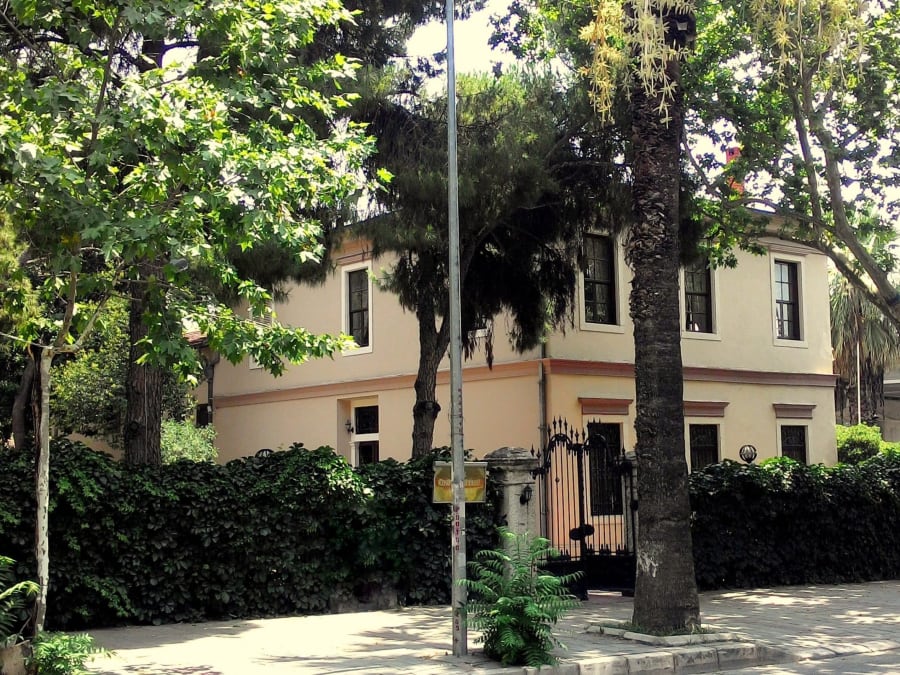
Built in 1880, the Belhomme Mansion is one of Bornova's most elegant Levantine buildings, with its eclectic facade design bearing traces of Italian civil architecture. Its first owner was Greek-Catholic merchant Pierre Xenoupoulo, followed by the Belhomme Family. Restored in 1997, the building today serves as the Bornova Municipality Ataturk Library.
 MansionsCivil Architecture
Bornova Merkez
Located at the entrance of Fevzi Cakmak Avenue, the Pasquali (Barry) Mansion was built between 1835 and 1840 by merchant Giuseppe Pasquali, who migrated from the island of Chios to Izmir. After Giovanni Pasquali's death in 1925, the mansion passed to his family and was expropriated in 1941 and transferred to the Bornova Agricultural School. Today it operates as a private cafe-restaurant.
 MansionsCivil Architecture
Bornova Merkez
Built in the second half of the 19th century for the Levantine Ballian Family, the mansion is notable for its ornate ceiling medallions and elegant interior details. Purchased by Esther Marian Giraud (Wilkinson) in 1900, the building was transferred to Ege University in 1970. Today it serves as the Paper and Book Arts Museum.
 MuseumsCivil Architecture
Bornova Merkez
The mansion on 80th Street was built between 1854 and 1856. Ownership of the house successively passed to the Douglas Paterson, Edwin Charnaud, De Zandonati, James Gout, and Victor Whittall families. Restored by its last owner Lucien Arkas, the house currently operates as the Arkas Maritime History Center, housing a very rich collection of maritime history artifacts.