Historic Buildings
Discover Bornova's past through its architectural heritage spanning from mansions to public buildings, mosques and churches.

Located in the courtyard of the Cesmeli Mosque in the Altindag neighborhood, the Nine Fountains consist of two separate fountains leaning against each other. With its nine-niche facade arrangement, it is also popularly known as the "Bitter Fountain." Built in different periods during the 18th and 19th centuries, these fountains are unique examples of Altindag's Ottoman water architecture heritage.

Located in the Erzene neighborhood, the Dramalilar Mansion dates to the late 18th and early 19th centuries. The mansion is notable for its outbuildings and private family bathhouse. Allocated to the Dramali Family, who came to Bornova during the 1924 population exchange, the building is an important cultural heritage that brings together the Levantine mansion tradition with post-exchange life.
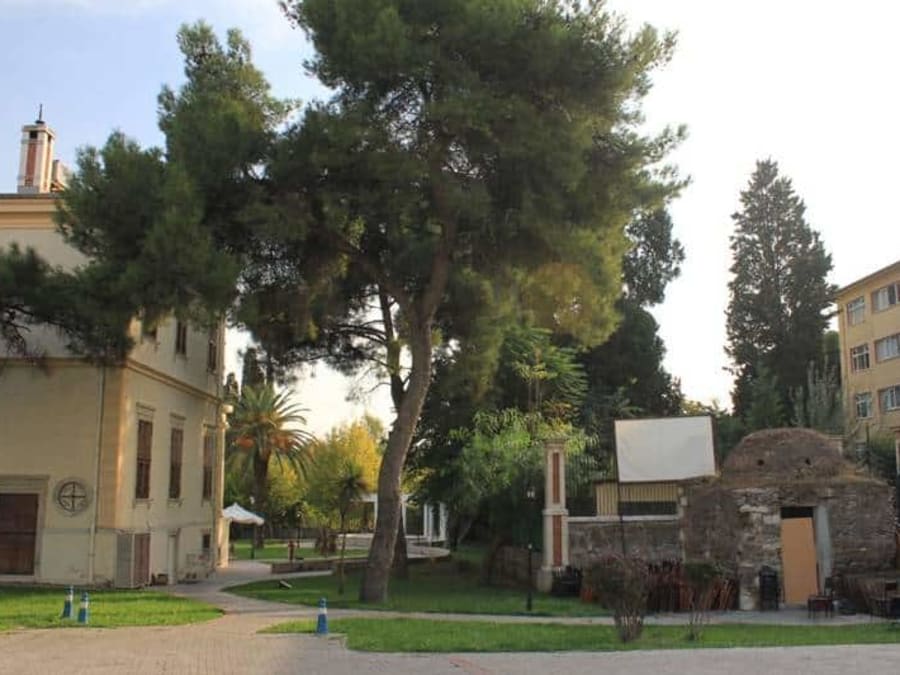
The small single-cell bathhouse in the garden of the Edwards (Murat) Mansion, which currently serves as the Izmir Directorate of Surveying and Monuments, was a socio-cultural component of mansion life. Currently in a state of near-collapse and in urgent need of restoration, it is an example of Levantine heritage in Bornova that requires preservation.

At Belkahve, the spot where Gazi Mustafa Kemal Ataturk first saw Izmir on September 9, 1922, a memorial fountain was commissioned by Izmir Governor Kazim Dirik between 1926 and 1928 to immortalize this historic moment. The current fountain was renovated in the 1940s; its original inscription was discovered in 2017 and is now exhibited at the Belkahve Ataturk Memorial House.

BAYETAV Art, opened at the Fernand Pagy House on May 6, 2023, hosts art and cultural events on its ground floor, while the upper floor brings Izmir's 300-400 year-old Levantine culture to the present through furniture, household items, and digital narratives of Levantine life. Admission is free.

Although the exact construction date is unknown, the Edward Whittall Mansion is known to have existed since the period when the Duke of Rovigo stayed in Izmir between 1816 and 1819. Taken over by British botanist Edward Whittall in the late 19th century, the mansion is notable for its botanical garden that gave its name to species such as Tulipa whittallii and Galanthus whittallii, and for hosting guests including Ataturk.

Located in the Gurpinar neighborhood, the exact construction date of the Pinarbasi Bathhouse is unknown, though it dates to the 16th-19th centuries. Consisting of a disrobing room, warm room, and hot room sections, the structure was restored by the Izmir Metropolitan Municipality in 2012.
A historic fountain commissioned by Levantine families.
A historic fountain structure dating from the Ottoman period.
A city museum exhibiting the history and cultural heritage of Bornova.
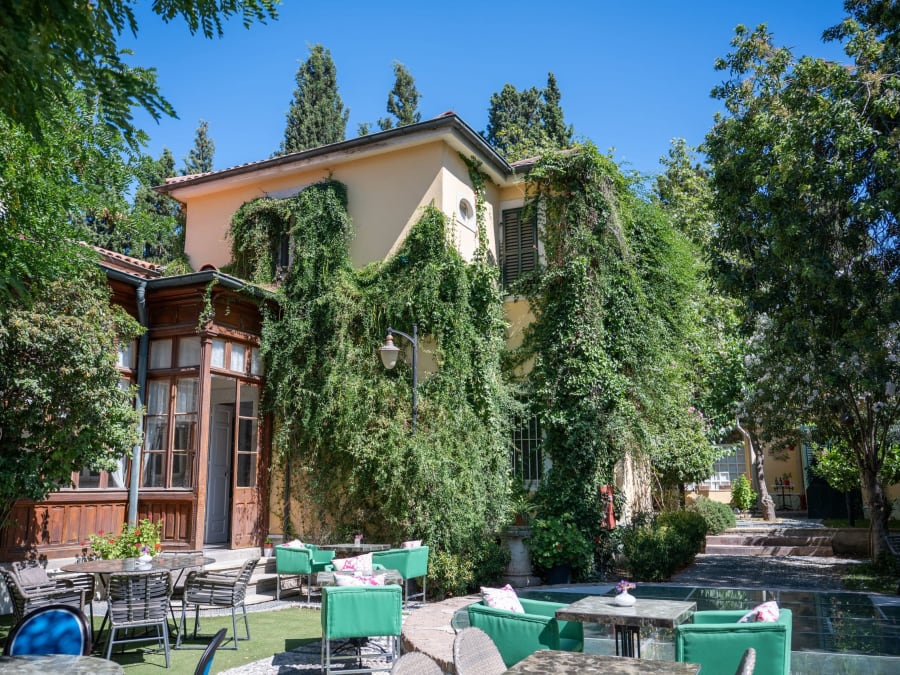
Notable for its 1831-dated pebble mosaic floor decoration, the Charnaud Mansion is one of Bornova's oldest Levantine residences. Originally owned by the Zipcy Family, the property passed to the Charnaud Family in 1919 and then to the Clark Family. Today it has been restored and opened to tourism as a boutique hotel. It is one of the significant examples of Levantine heritage in Bornova.

Built in 1860 by Scottish merchant John Bortwick Paterson, the Paterson Mansion is one of Bornova's most magnificent Levantine residences, with its monumental 38-room structure, ballrooms, musical culture, golf course, and horse-breeding grounds. During the Republican era, the mansion also served as a NATO office and factory. Today it has been transferred to the Ministry of Culture and Tourism.