
Medium Route
A medium-length route covering Bornova's historic mansions, museums, and cultural heritage.

1880'de inşa edilen Belhomme Köşkü, eklektik cephe düzeni ve İtalyan sivil mimarisinden izler taşıyan tasarımıyla Bornova'nın en zarif Levanten yapılarındandır. İlk sahibi Yunan-Katolik tüccar Pierre Xenoupoulo, sonraki sahibi Belhomme Ailesi'dir. 1997'de restore edilen yapı, bugün Bornova Belediyesi Atatürk Kütüphanesi olarak hizmet vermektedir. Ziyaret: Hafta içi 08.30-17.00

The structure is located on 538th Street in Bornova's Ergene neighborhood. The mosque is situated within Bornova's Grand Bazaar. Also known as the Grand Mosque, Bornova Great Mosque, Bazaar Mosque, or Cami-i Kebir, the structure sits within a courtyard. Entry is through the narthex on the north facade. Built on a rectangular plan, based on the dome before the mihrab, it features five aisles in the longitudinal direction [...]

The structure is located in Bornova's Cumhuriyet Square. Built on a north-south axis, the building's inscription reads: "In the year of our Lord 1831, the Reverend Father Isodoro da Boscomari, fulfilling the rule of Saint Franciscus, with the capital contribution of the Istanbul Mission, the Capuchin Fathers and currently apostolic delegate, had this building constructed from its foundations in the name of the Blessed Virgin Mary."...

Edward Price, representative of The Smyrna Cassaba Railway Company, which had been authorized with a concession to build the planned railway line between Izmir and Turgutlu, had requested a separate concession for the construction of a new railway line from Izmir to Birunabad (Bornova). The purpose was to serve the Levantines living in Bornova and their...

Located at the entrance of Fevzi Cakmak Avenue, the Aliotti (Michel Topuz) House was built in the 19th century by the Aliotti Family, one of Bornova's prominent Levantine families. The building later passed to the Topuz Family and has largely preserved its original Levantine architecture. Today it operates as a dental clinic.
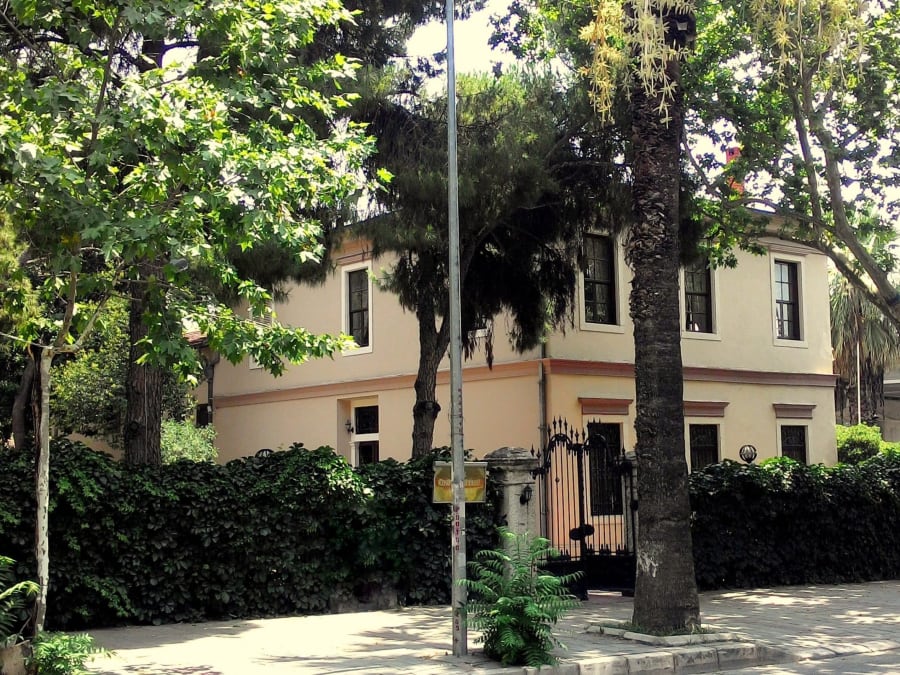
Located at the entrance of Fevzi Cakmak Avenue, the Pasquali (Barry) Mansion was built between 1835 and 1840 by merchant Giuseppe Pasquali, who migrated from the island of Chios to Izmir. After Giovanni Pasquali's death in 1925, the mansion passed to his family and was expropriated in 1941 and transferred to the Bornova Agricultural School. Today it operates as a private cafe-restaurant.

Located on Fevzi Cakmak Avenue, the Ege University Ethnography Museum houses a rich collection of Anatolian and Rumelian regional costumes as well as musical instruments from the Turkic world. The museum is notable for its artifacts reflecting cultural diversity.

The Aliberti (Wolf) Mansion is an important Levantine residence built in the mid-19th century. Although there are differing accounts regarding its first occupants between the Wolf Brothers and the Paterson Family, the mansion also hosted the La Fontaine Family in the early 20th century. It has been used by the Aliberti Family since the 1950s.

1839 yılında Fransız Giraud Ailesi tarafından yaptırılan köşk, Bornova'nın en eski Levanten yapılarındandır. İki katlı, geniş salonlu ve bahçeli köşk, klasik Levanten villa mimarisinin özelliklerini taşır. 1955'te Ege Üniversitesi'ne devredilmiş ve rektörlük binası olarak kullanılmıştır. Günümüzde üniversite idari binası olarak hizmet vermektedir.

Built in the second half of the 19th century for the Levantine Ballian Family, the mansion is notable for its ornate ceiling medallions and elegant interior details. Purchased by Esther Marian Giraud (Wilkinson) in 1900, the building was transferred to Ege University in 1970. Today it serves as the Paper and Book Arts Museum.

Located next to the Big House grounds, the House with the Well was the center of Levantine social life in Bornova in the late 19th and early 20th centuries, known as the "English Club." Its first owner was James La Fontaine. Transferred to Ege University in 1966, the building was restored in 2015 and today serves as the International Relations Coordination Office.

The Tristram Mansion was built in 1904 by the British Tristram Family. One of the family's notable members is Uvedale Barrington Tristram (1826-1898).

Commissioned in 1865 by James Whittall for his daughter Jane and son-in-law Richard Wilkinson, Consul of Thessaloniki-Malaga-Manila, the mansion is one of Bornova's most distinguished Levantine buildings. Owned by the Wilkinson Family until 1985, the building was transferred to Ege University in 1997, restored in 2005, and named the "EU 50th Anniversary Mansion." Today it houses the EU Faculty of Fine Arts, Design, and Architecture.
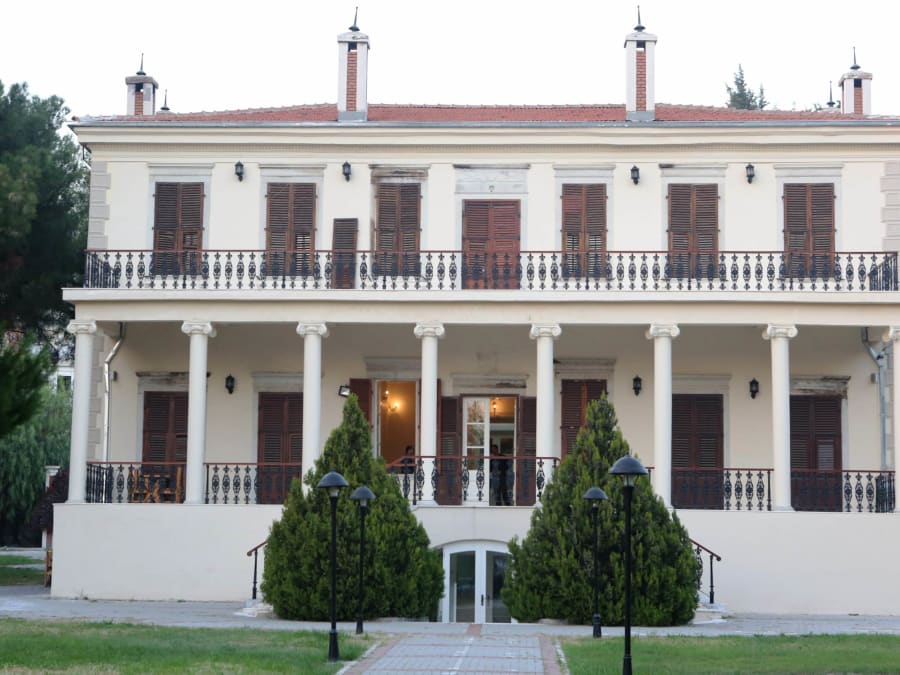
Built in 1880 by the British Edwards Family, the mansion is one of Bornova's important Levantine heritage buildings. It acquired the name "Murat Mansion" from Constantin Murat, who married Edwards's daughter Emily. Expropriated in 1980, the building was evaluated by the Izmir Metropolitan Municipality and Ege University after restoration. Today it serves as the Izmir Directorate of Surveying and Monuments.

Located across from St. Mary Magdalene Church, the La Fontaine Mansion was built in the late 19th century by British-origin James La Fontaine (1881-1930). The grandson of Charlton Whittall, owner of the Big House, through his daughter Blanche Magdalene Whittall, La Fontaine is known as the person who established the league system in Turkish football. The mansion today serves as the Ege University Ataturk Principles and Revolution History Center.

