
Long Route
The most comprehensive route covering all of Bornova's historic mansions, museums, religious buildings, and natural heritage.

The structure is located on 538th Street in Bornova's Ergene neighborhood. The mosque is situated within Bornova's Grand Bazaar. Also known as the Grand Mosque, Bornova Great Mosque, Bazaar Mosque, or Cami-i Kebir, the structure sits within a courtyard. Entry is through the narthex on the north facade. Built on a rectangular plan, based on the dome before the mihrab, it features five aisles in the longitudinal direction [...]
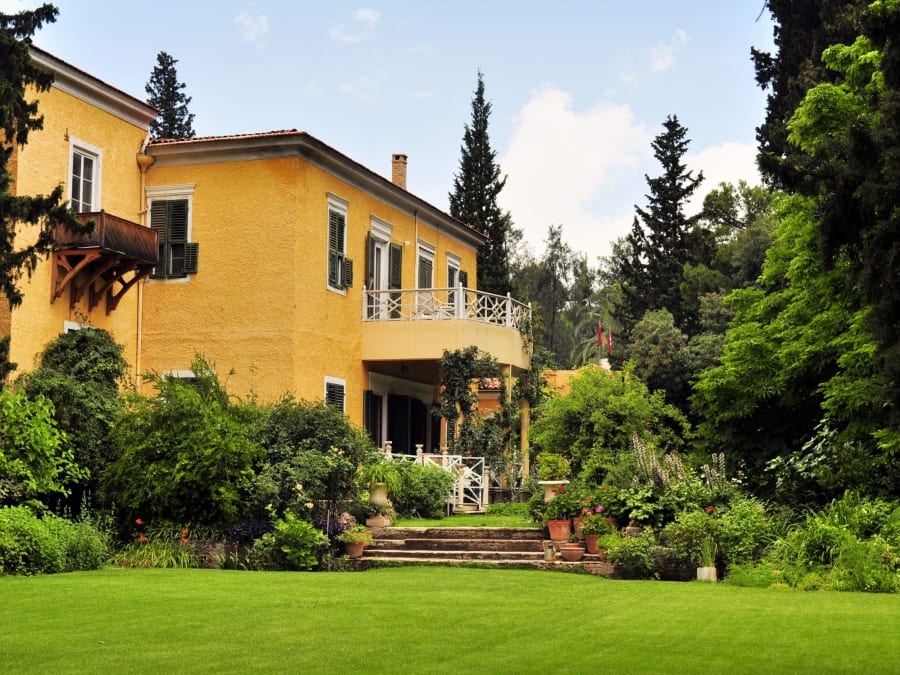
The earliest known history of Edward Whittall Mansion dates to 1816–1819, when the Duke of Rovigo, one of Napoleon's generals, stayed at this residence in Bornova. Edward Whittall Period (1875–1917): Born in 1851, Edward Whittall was one of Bornova's most renowned Levantines. After spending his childhood in the gardens of Charlton Whittall Mansion, he settled in this mansion in 1875 and quickly transformed it into a European-style...

Edward Price, representative of The Smyrna Cassaba Railway Company, which had been authorized with a concession to build the planned railway line between Izmir and Turgutlu, had requested a separate concession for the construction of a new railway line from Izmir to Birunabad (Bornova). The purpose was to serve the Levantines living in Bornova and their...

Used as a residence by Arthur Iplikciyan and his family between 1895 and 1922, the mansion served as a military headquarters under the name Emin Ari Barracks for many years from the early years of the Republic. Owned by the Ministry of National Defense, the building has been vacant as of 2025.

Located at the entrance of Fevzi Cakmak Avenue, the Aliotti (Michel Topuz) House was built in the 19th century by the Aliotti Family, one of Bornova's prominent Levantine families. The building later passed to the Topuz Family and has largely preserved its original Levantine architecture. Today it operates as a dental clinic.
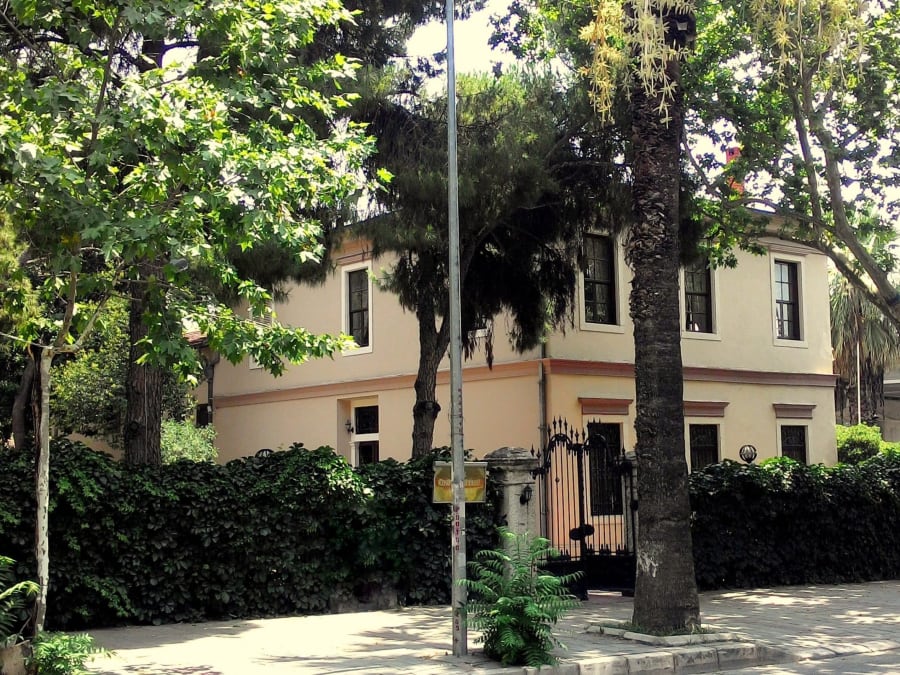
Located at the entrance of Fevzi Cakmak Avenue, the Pasquali (Barry) Mansion was built between 1835 and 1840 by merchant Giuseppe Pasquali, who migrated from the island of Chios to Izmir. After Giovanni Pasquali's death in 1925, the mansion passed to his family and was expropriated in 1941 and transferred to the Bornova Agricultural School. Today it operates as a private cafe-restaurant.
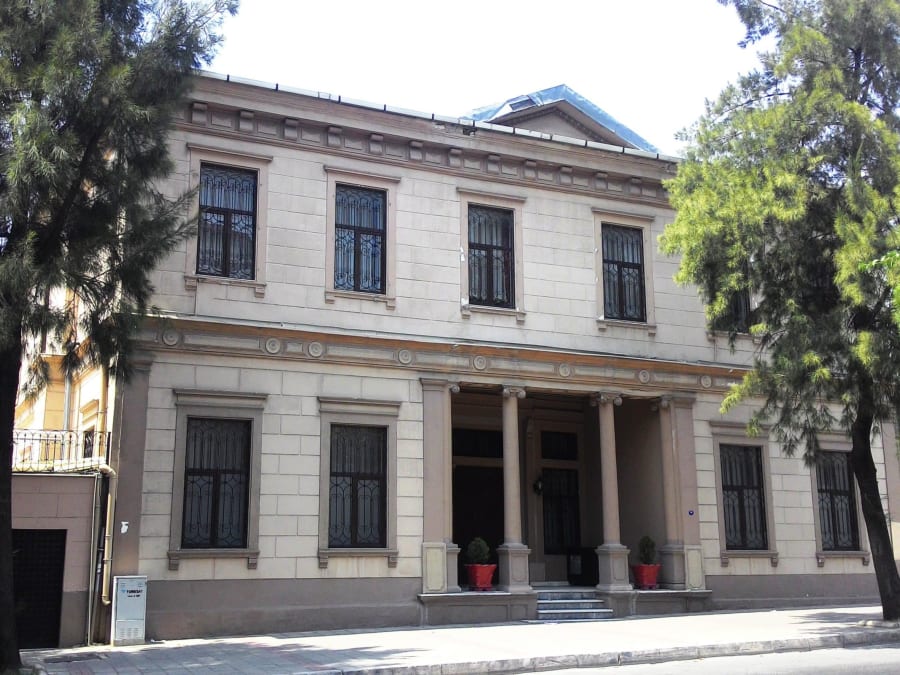
Built by the American Davy, the mansion was used by the Macropodere Family in the early 20th century and served as the residence of Izmir Governor Rahmi Bey for a period. On April 11, 1934, Mustafa Kemal Ataturk had his photograph taken with the people of Bornova here. Today it serves as the Officers' Club.

Located on Fevzi Cakmak Avenue, the Ege University Ethnography Museum houses a rich collection of Anatolian and Rumelian regional costumes as well as musical instruments from the Turkic world. The museum is notable for its artifacts reflecting cultural diversity.

Built in the second half of the 19th century for the Levantine Ballian Family, the mansion is notable for its ornate ceiling medallions and elegant interior details. Purchased by Esther Marian Giraud (Wilkinson) in 1900, the building was transferred to Ege University in 1970. Today it serves as the Paper and Book Arts Museum.

The Giraud Mansions, consisting of two twin mansions built by Greek-origin Marcopoli in 1860, are notable for their position overlooking Bornova Square. While the right structure retains its original form, the left mansion was rebuilt by Harold Giraud in the 1930s. Today they serve as private residences.

Built in the 1830s by the Zipcy Family, the De Andria Mansion is one of the elegant early examples of Levantine architecture in Bornova. Owned by prominent Levantine families including Richard Matheys and Charles Balladur, the building was used as the De Andria Family's residence until 1973. Today it has been restored and serves as a cafe.

The mansion on 80th Street was built between 1854 and 1856. Ownership of the house successively passed to the Douglas Paterson, Edwin Charnaud, De Zandonati, James Gout, and Victor Whittall families. Restored by its last owner Lucien Arkas, the house currently operates as the Arkas Maritime History Center, housing a very rich collection of maritime history artifacts.

Located on 2nd and 3rd Streets in Erzene neighborhood, Dramalilar Mansion is dated to the late 18th–early 19th century, though its exact construction year is unknown. It is a complex consisting of a main building, a bathhouse, outbuildings, a stable, and entrance structures. The southwest facade opens to the front courtyard, while the northeast facade opens to the rear courtyard. Before 1922, the mansion belonged to a Greek family living in Bornova [...]

The Tristram Mansion was built in 1904 by the British Tristram Family. One of the family's notable members is Uvedale Barrington Tristram (1826-1898).

Belhomme Mansion — originally known as Xenopoulou Mansion — was built in the 1880s by the English-origin Wolf Brothers. One of the mansion's first known owners was Greek-Catholic merchant Pierre Xenoupoulo, followed by the Belhomme Family. The family's last Levantine representative, Helen Armand, was among the mansion's residents in the mid-20th century. In the 1950s, ownership passed to a Turkish family, and in the 1960s the mansion was nationalized...

Yesilova and Yassitepe Mounds are archaeological sites where the oldest human findings in Izmir have been unearthed. Excavations in this area, located in Bornova's Karacaoglan neighborhood, have revealed settlement layers dating back 8,500 years (6500 BC). The mound, accidentally discovered in 2003, was declared a 1st Degree Archaeological Site in 2005.

Homeros, an indispensable figure of Western literature, is a figure who, despite being Anatolian, has become universal rather than local. The Iliad and the Odyssey, the epics he compiled, are considered the starting point of Western culture.
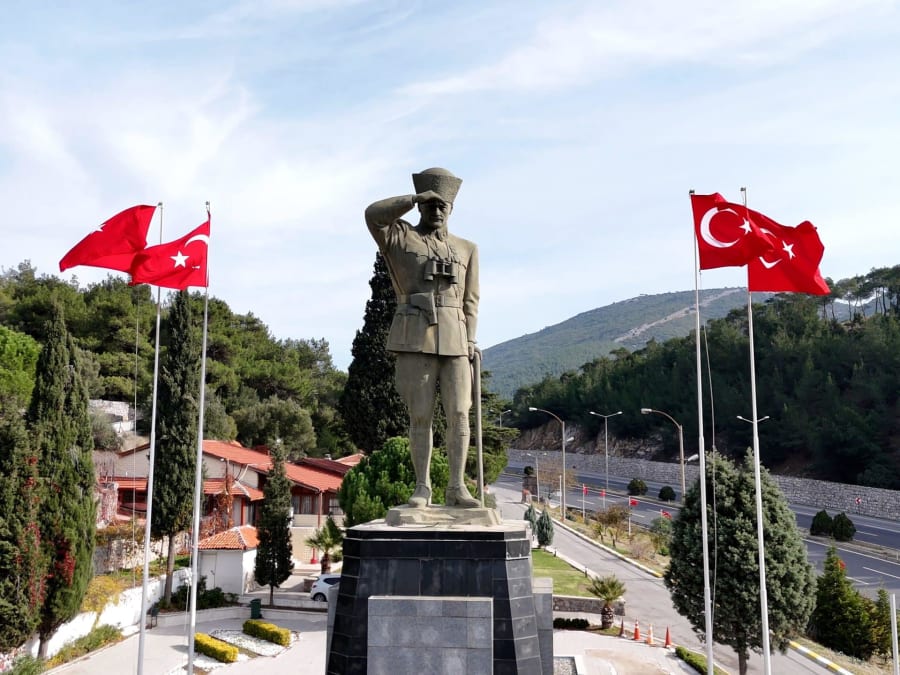
Belkahve, one of the strategic passes east of Izmir, holds a special place in Turkish history as the point where Mustafa Kemal Ataturk first gazed upon Izmir on September 9, 1922. Bornova Municipality opened the Belkahve Ata Memorial House Visitor Center on September 9, 2016, to keep this significance alive. The center offers visitors both the spirit of the War of Independence and the symbolic moment of Izmir's liberation...
