Culture & Memory
Discover Bornova's historical, cultural and natural heritage.
 Bridge
Yakaköy
Basin: Gediz. River: This bridge is located in the Nif (Kemalpasa) Stream (Gediz tributary) basin, at coordinates 38°29'38.40"N 27°17'47.47"E in Izmir – Bornova; Ciceklikoy-Arapalani area. Also known among locals as the Historic Roman Bridge, it is a main-arched bridge with slight slopes in both directions, featuring 10 arches. On the upstream facade of the bridge, including the main arch [...]
 Bust
BustKazımdirik
In the second half of the 1800s, as the Ottoman Empire's integration with Western civilizations intensified, the Levantine families in Izmir in particular assumed a guiding role, causing Izmir to become acquainted with many firsts in Western civilization and culture. The foremost among these firsts is football. According to the Tercuman Sports Encyclopedia published in 1970 and Turkey's Football...
 Mansion
Kazımdirik
The Ataturk bust located in the garden of Ege University's Computer Engineering Faculty in Bornova holds the distinction of being the first Ataturk monument built in Turkey. This monument is the first and only known monument whose opening ceremony Gazi Mustafa Kemal Ataturk personally attended. According to available information, Ataturk never attended the opening of any other monument thereafter. Sari Kosk (Yellow Mansion): Today's Ege University Faculty of Economics and Administrative...
 Religious Building
Ergene
The structure is located on 538th Street in Bornova's Ergene neighborhood. The mosque is situated within Bornova's Grand Bazaar. Also known as the Grand Mosque, Bornova Great Mosque, Bazaar Mosque, or Cami-i Kebir, the structure sits within a courtyard. Entry is through the narthex on the north facade. Built on a rectangular plan, based on the dome before the mihrab, it features five aisles in the longitudinal direction [...]
 Bust
BustErzene
Homeros, an indispensable figure of Western literature, is a figure who, despite being Anatolian, has become universal rather than local. The Iliad and the Odyssey, the epics he compiled, are considered the starting point of Western culture.
 Nature Reserve
Eğridere
A Silent Witness of Nature. In Egridere Village, nestled in the deep green of the Homeros Valley east of Bornova, a natural monument that defies time rises: the Egridere Monumental Tree. This massive tree, a Valonia Oak (Quercus ithaburensis), is a unique heritage that has witnessed Bornova's history, nature, and cultural fabric for approximately 400–500 years. In 2002, it was registered as a protected natural asset...
 Mansion
Erzene
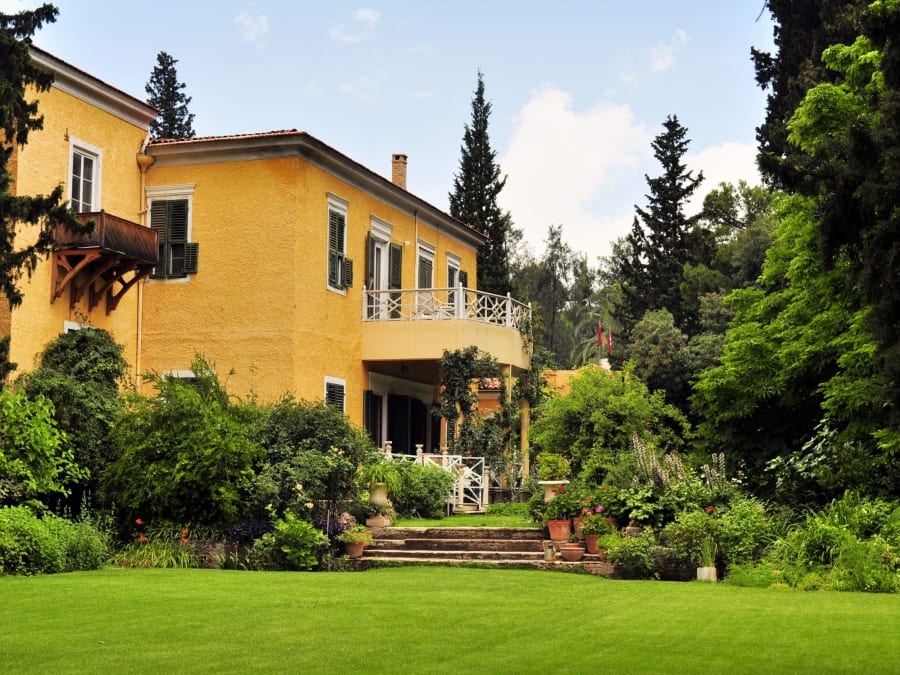
The earliest known history of Edward Whittall Mansion dates to 1816–1819, when the Duke of Rovigo, one of Napoleon's generals, stayed at this residence in Bornova. Edward Whittall Period (1875–1917): Born in 1851, Edward Whittall was one of Bornova's most renowned Levantines. After spending his childhood in the gardens of Charlton Whittall Mansion, he settled in this mansion in 1875 and quickly transformed it into a European-style...
 Mansion
Erzene
Located on 2nd and 3rd Streets in Erzene neighborhood, Dramalilar Mansion is dated to the late 18th–early 19th century, though its exact construction year is unknown. It is a complex consisting of a main building, a bathhouse, outbuildings, a stable, and entrance structures. The southwest facade opens to the front courtyard, while the northeast facade opens to the rear courtyard. Before 1922, the mansion belonged to a Greek family living in Bornova [...]
 Religious Building
Doğanlar
Bornova Doganlar Chapel is a small-scale example of sacred architecture reflecting the worship practices of the Greek Orthodox community at the rural/urban interface in 19th-century Izmir. Within Izmir's cosmopolitan 19th-century fabric, Greek Orthodox places of worship are spatial projections of both liturgical requirements and interactions with the local/Levantine environment.
 Mansion
Erzene
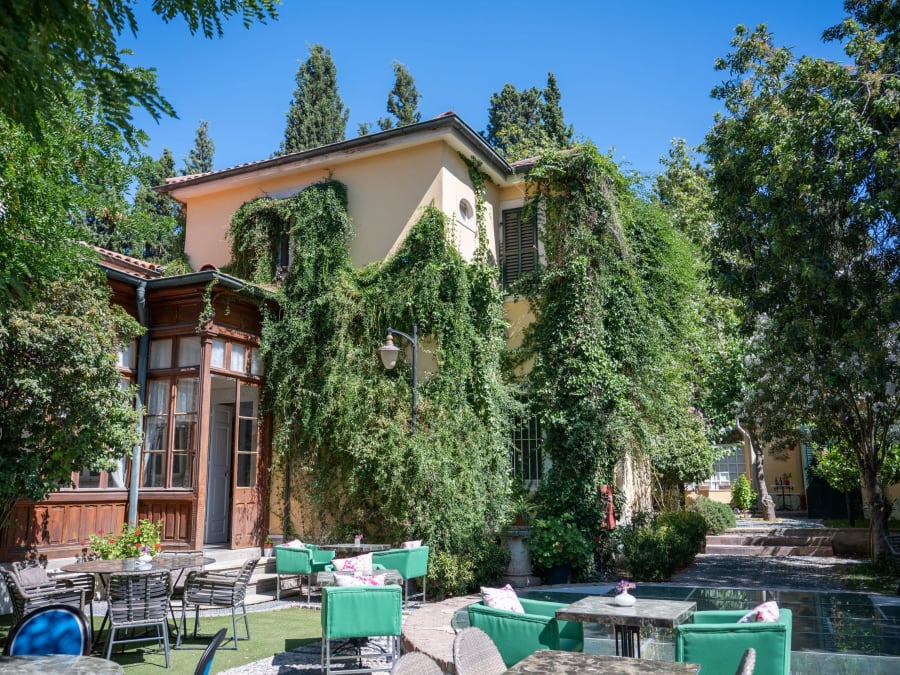
Charnaud Mansion is one of the oldest Levantine residences in Bornova. The "1831" inscription on the black-and-white pebble mosaic in its garden confirms the mansion's construction date. The property initially belonged to the Zipcy Family, then passed to the Charnaud Family in 1919, and subsequently to the Clark Family. Throughout the 20th century, the mansion hosted various Levantine and Turkish families and served as part of Bornova's social memory...
 Mansion
Erzene
The site where Charlton Whittall Mansion stands was a monastery built for Dutch nuns in the early 18th century. Later, a single-story residence was built by a Dutch immigrant. James Whittall, one of the famous Levantine families who settled in Izmir in 1817, purchased this house in the 1820s. After his death, the property passed to his brother Charlton Whittall. As the family expanded and renovated the structure, the mansion became one of Bornova's...
 Train Station
Kazımdirik
Edward Price, representative of The Smyrna Cassaba Railway Company, which had been authorized with a concession to build the planned railway line between Izmir and Turgutlu, had requested a separate concession for the construction of a new railway line from Izmir to Birunabad (Bornova). The purpose was to serve the Levantines living in Bornova and their...